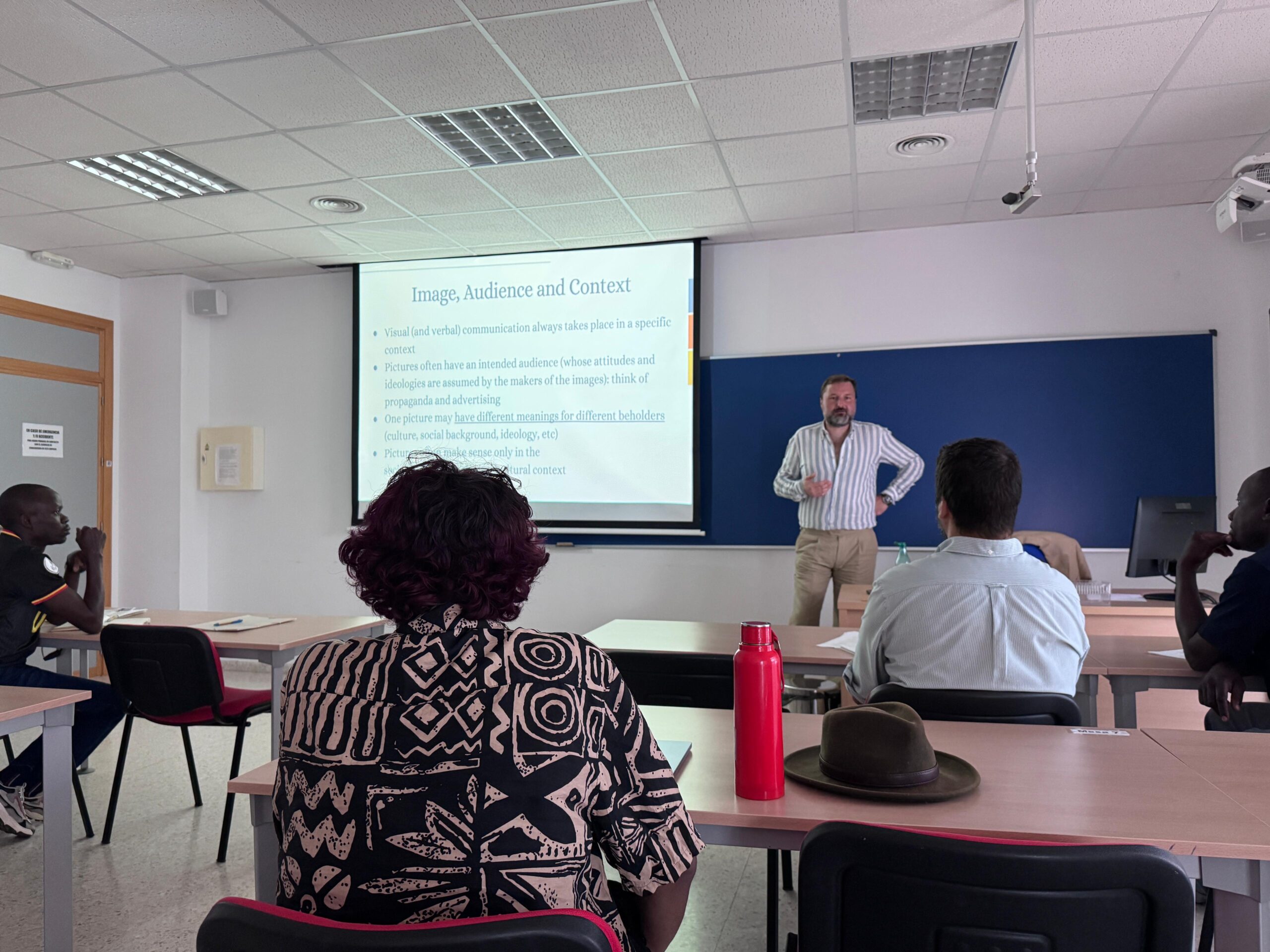
Discover how MIUC has developed financial literacy through expert-led modules, bootcamps, and industry seminars over the past decade
Marbella International University Centre (MIUC) has spent over a decade integrating financial literacy as a core pillar of its academic mission. At MIUC, financial literacy is far more than a course requirement—it is a strategic commitment to empowering students with the tools, confidence, and mindset to navigate complex financial landscapes, both personally and professionally.
Academic Leadership in Finance Education
MIUC’s finance-related modules are delivered by an international faculty with deep academic and industry credentials:
Dr Ming Jin jiang, an expert in quantitative finance and statistical modelling, equips students with advanced, data-driven financial strategies.
Dr Fernando Ramírez de Verger brings expertise in financial economics and public policy, contextualising financial decision-making within broader macroeconomic and societal frameworks.
Christophe de Landtsheer, a long-time advocate for financial literacy at MIUC, leads the design of seminars and workshops that embed financial education across various business disciplines.
This academic leadership ensures that students receive both theoretical depth and applied relevance in every finance course.
Real-World Finance Skills: Bootcamps and Academies
MIUC complements classroom learning with intensive, hands-on training in finance through its bootcamps and academies:
Finance Bootcamps (2024)
Financial Mathematics for Business
This bootcamp focused on essential concepts such as:
Interest rates
Present and future value calculations
Loan repayment structures
Students applied these tools through budgeting exercises and investment case studies—bridging theory and real-world decision-making.
Financial Markets Overview
A comprehensive introduction to:
Equities
Debt instruments
Derivatives
Participants analysed market trends and investor behaviours, building a foundational understanding of financial instruments and capital markets.
Business Accounting Academy
Launched in the previous semester, this academy offered a structured, practical immersion into:
Reading and preparing financial statements
Understanding cost structures
Budgeting for real business scenarios
The programme ensures students graduate with a robust understanding of core accounting principles.
ConnectED Calendar: Bridging Academia and Industry
The ConnectED Calendar is MIUC’s platform for connecting students with finance professionals and global thought leaders. Recent highlights include:
April 2024:
“A Practical Finance Journey in Corporations” – a lecture by Mr Daniel Traverso, MBA, CPA (Webster University Vienna; former finance director at Dell, EMC, Deloitte). Traverso discussed the lifecycle of financial management in both startups and multinational corporations.
March 2024:
Reserve Asset Management in Development Finance – a seminar by Dr Ian Sinclair-Begg, economist and policy advisor. Students explored sovereign wealth strategies and the mechanics of global monetary systems. Read more
Recent Lecture:
Joint Ventures and International Financial Collaboration – delivered by Dr Mario Glowik as part of the ConnectED series. Full article
Financial Insight Academy:
Led by Sergio Reyes, MBA, this programme featured interactive simulations where students practised making financial decisions under real-time pressure. More here
Building a Legacy of Financial Empowerment
MIUC’s focus on financial education predates recent programmes:
Seminars led by Christophe de Landtsheer in collaboration with guest professionals provided foundational skills in:
Credit and debt management
Personal financial planning
Strategic financial thinking for entrepreneurs and corporate professionals
From accounting fundamentals to global finance policy, MIUC ensures every graduate is not only fluent in financial language but can interpret and apply it effectively in any context.
Looking Ahead: Financial Literacy as a Strategic Priority
As MIUC moves into the next decade, financial literacy will remain integrated at every academic level—from undergraduate to executive education. The goal is simple but powerful: to graduate students who don’t just understand the numbers, but can interpret, challenge, and leverage them for impactful decision-making.