Mastering AI Bootcamp: Equipping Students for the Future
At MIUC, we believe that education should not dictate what students think but rather empower them to think critically and independently. In a world increasingly shaped by artificial intelligence (AI), this means fostering engagement with emerging technologies rather than resisting them. AI is no longer a distant prospect; it is already a defining feature of our present reality, transforming industries and reshaping the professional landscape.
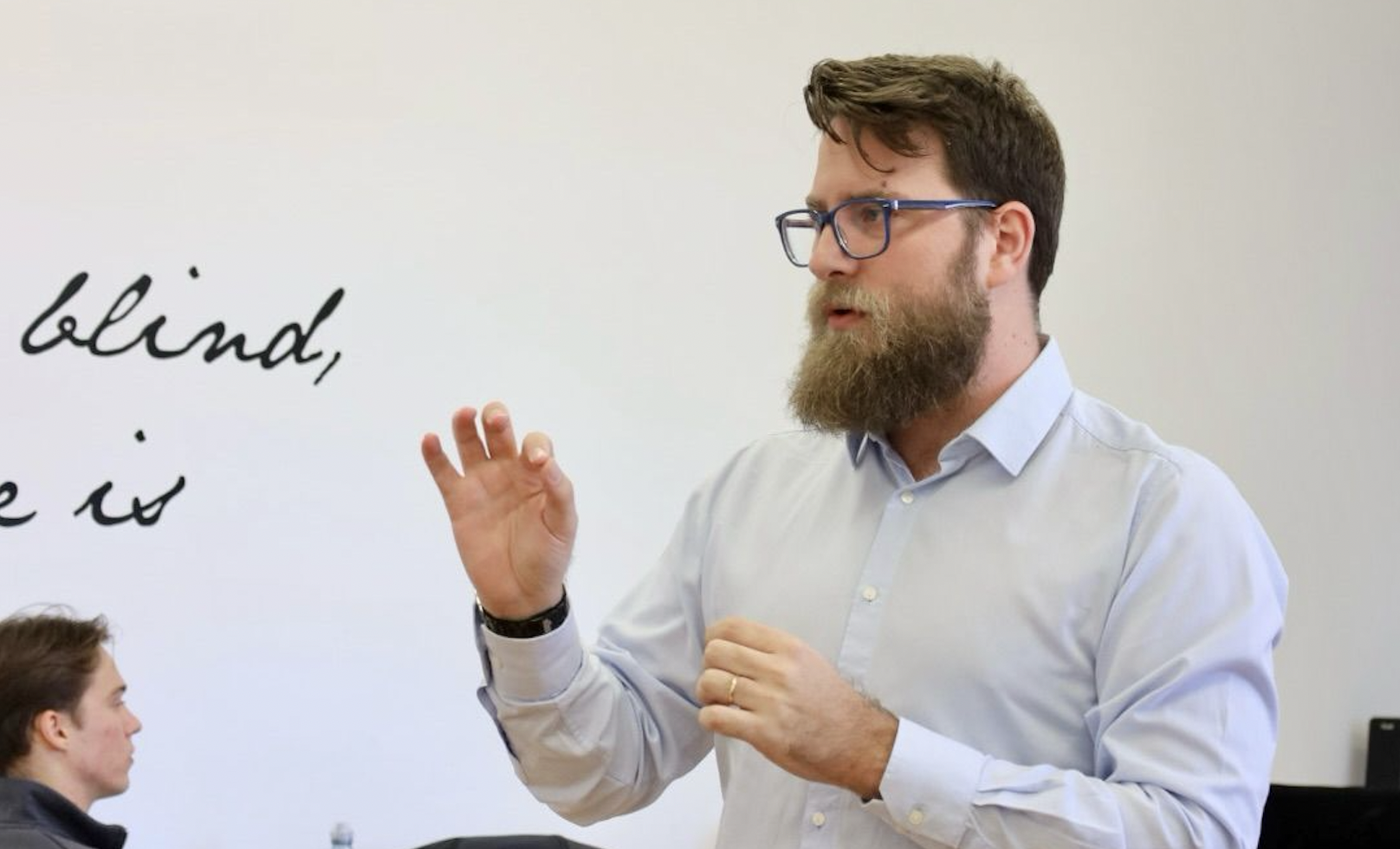
The Mastering AI Bootcamp at MIUC was led by Fernando Moreno, PhD Candidate an accomplished engineer and technology consultant with extensive experience across both public and private sectors. He holds a degree in Health Engineering with a specialisation in Bioinformatics from the University of Málaga, as well as a double master’s degree in Omics Sciences Analysis and Cloud Computing from the Universitat Oberta de Catalunya and the University of Castilla-La Mancha. Currently pursuing a PhD in large-scale health data analysis, Fernando specialises in deploying tools that boost productivity and address real-world challenges. With a background in data analytics, artificial intelligence, and high-performance computing, he also supports users across public cloud platforms and within the Spanish Supercomputing Network.
Just as earlier generations became proficient in tools like Microsoft Office, today’s students must cultivate fluency in AI platforms that are becoming essential across industries. During the bootcamp, students were introduced to a wide array of cutting-edge tools. These included ChatGPT, Gemini, and Copilot for advanced search, writing assistance, and coding support; Gamma for presentation generation; Whisper and Amazon Transcribe for speech-to-text applications; FreepikAI for creating images and animations; ElevenLabs for voice cloning and text-to-speech functionality; Gooey.ai for lip syncing; and Synthesia for AI-generated video content. Additionally, Claude Sonet and ChatGPT were employed for code generation, offering students hands-on experience in the fundamentals of digital product development.
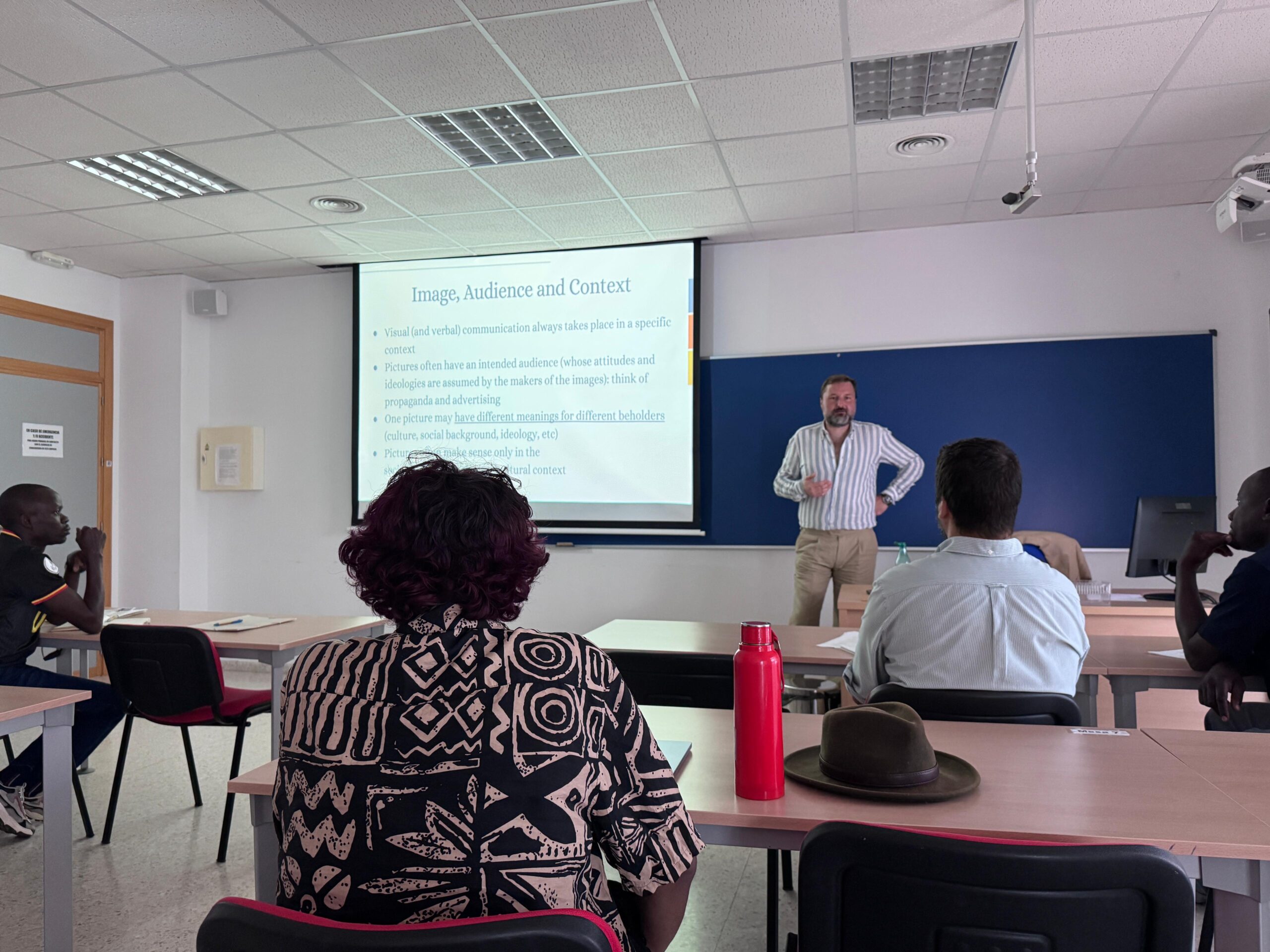
Throughout the bootcamp, participants explored both the theoretical and practical dimensions of AI. Initial sessions covered the basic concepts of artificial intelligence, including its limitations and associated legal considerations. Students debated the implications of Artificial General Intelligence (AGI) and examined case studies to contextualise their learning. As the course progressed, they simulated real-world scenarios, such as internal and external business meetings. These exercises involved conducting research, generating presentations using AI, and leveraging transcription tools to automate note-taking. Students gained hands-on experience with AI search engines, speech-to-text processing, and large language model (LLM)-based content extraction.
Another core focus of the bootcamp was AI-driven content creation, tailored for students working within marketing or community management contexts. They learned to use AI for crafting blog content, email campaigns, product descriptions, and multilingual social media posts—strategically adapted to diverse sociocultural profiles. The course emphasised how to enhance content impact through the generation of visual media such as images and animations using AI-powered tools.
In subsequent sessions, students explored how AI can support the creation of educational and training materials. Although they did not produce videos directly, they studied advanced tools for text-to-speech conversion, voice cloning, and lip synchronisation.The use of LLMs was revisited for generating instructional content, which was adapted to varied educational levels and personalised through summarisation tools.
The final segment of the bootcamp focused on students as future entrepreneurs and leaders. Attendees took on the role of CEOs developing tech-based projects. They learned the basics of technical project infrastructure, calculated costs, explored AI-assisted solutions, and used AI to generate code for creating functional websites—some of which were deployed in real-time environments. Networking was encouraged among the more motivated participants, with discussions around startup development, team formation, and raising capital. While this session was not exclusively focused on AI, it provided valuable insights into innovation and business creation in a tech-driven world.
Throughout all sessions, participants were exposed to a spectrum of AI applications, from free and freemium tools to premium software and APIs—catering to students interested in integrating these solutions into their future projects.
The ability to effectively prompt and work alongside AI will soon be as fundamental as composing an email or designing a presentation. AI amplifies creativity, supports problem-solving, and enhances productivity. To restrict its use is not to protect learning but to limit students’ potential.
We often speak of building adaptable and resilient graduates—yet students are also observing how we, as educators, respond to the rise of AI. Just as every sector evolves, so too must education. Failing to adapt risks leaving future professionals ill-equipped for the challenges ahead.
At MIUC, our mission is to prepare students not just for employment, but for life. As technology continues to reshape industries and redefine career trajectories, our priority is to equip our students with the tools and mindset needed to thrive. We nurture adaptability, creativity, and critical thinking, while also developing their confidence in using and shaping emerging technologies.
Regardless of how the world changes, MIUC graduates will possess the capacity to face it with resilience and expertise, prepared not only to participate in the future—but to lead it. Certificates of Attendance were awarded in a ceremony to those who attended all sessions of the MIUC Mastering AI Bootcamp.