

International Business Management
This is a three-year BA (Hons) in International Business Management, taught entirely in English and worth 360 UK credits. Your degree will be awarded by the University of West London, UK.
A degree built for global markets
This degree is designed for students who want to understand how business works across borders – and how to make it work better. Over three years, you’ll study international business management, finance, and marketing, while examining how companies operate in both advanced economies and emerging markets.
Classes are small, interactive, and taught entirely in English. You’ll be guided by a team of international lecturers with backgrounds in business, economics, finance, marketing, communications, and negotiation, supported by visiting industry experts who bring current insights into the classroom.
At MIUC, theory is never taught in isolation. Every concept is linked to real-world case studies, practical projects, and business simulations, so you graduate with both academic knowledge and hands-on skills. Along the way, you’ll sharpen your ability to make strategic decisions, lead across cultures, and manage the complexities of modern business.
This degree is awarded through our academic partner, the University of West London — recognised in The Times and Sunday Times University Guide 2024 as the UK’s #1 university for teaching quality and student experience.
By the time you graduate, you’ll know how to build and implement business strategies, create sustainable and scalable business models, manage human resources, supply chains, and customer relations, translate business metrics into meaningful intelligence, and negotiate effectively in high-stakes, cross-cultural contexts.

Business Management with Christophe de Landtsheer, MSc
Christophe de Landtsheer, MSc has spent years teaching Business Management at MIUC – and in this video he gets specific about the gap between what students think the degree is about and what it actually trains you to do. If you’re trying to find out whether Business Management is the right direction – or you’ve already decided and want to know what you’re walking into – this conversation is a good place to start.
Degree Outline
This programme was created in collaboration with local organisations across both the public and private sectors, giving it a direct connection to the realities of modern international business. It’s designed to help you navigate today’s fast-moving landscape by combining solid academic foundations with practical insight.
You’ll be learning from faculty who bring decades of experience across business, industry, and academia. Their backgrounds cover human resources, operations, finance, marketing, strategic management, business ethics, and enterprise development — a mix that gives you a broad understanding of how different parts of a company work and how decisions are made.
The teaching approach blends theory with application. Lectures introduce new ideas and frameworks, while practical sessions show you how to use them. Throughout the programme, you’ll work through real tasks, collaborate with classmates, take part in discussions that push your thinking, and meet with tutors in both group and individual settings. Online tools support everything you do, keeping your learning structured and accessible.
The result is a programme that builds your knowledge and sharpens the personal and professional skills you’ll need across any business environment.
Tuition Fees
The annual tuition fee is €20,800 and covers everything you need for the academic year: course registration, study materials, full access to the Blackboard learning platform, use of the library, visa and immigration guidance, and 24/7 student support.
The fee is the same whether paid per semester or for the full year.
Students who pay before May 15th can receive an early-payment discount: 15% off the full annual fee, or 10% off if paying per semester.
Course registration takes place during the first week of each semester. Enrolling in a course creates both an academic and financial commitment; choosing not to attend later does not cancel that commitment.
Any student wishing to withdraw from a course must officially de-register through Student Services.
All students are expected to be familiar with the university’s regulations as published.
Entry Requirements
MIUC operates on a rolling admission basis, which means applications are reviewed as soon as they are submitted.
To apply, you’ll need to provide:
a copy of your passport or ID, a passport-sized digital photo, your high school certificate and transcripts translated into English or Spanish, a statement of purpose (at least 500 words), two letters of recommendation, and your CV.
Applicants aged 21 and above who do not meet the academic requirements but have relevant professional experience are welcome to apply and will be assessed individually.
Applicants who wish to apply for Recognition of Prior Experiential or Certificated Learning (RPEL or RPCL) should contact our Recruitment & Admissions Team. A student guide to credit transfer and recognition of prior learning.
Students can also enter directly into later stages of the degree:
- Entry to Level 5 (second year) is possible for applicants with 120 undergraduate credits at Level 4 or a CertHE in a related field.
- Entry to Level 6 (third year) is open to those with 240 credits (Levels 4 and 5), a DipHE, Foundation Degree, or HND in a related discipline. MIUC also accepts credit transfers from accredited universities and higher-education institutions.
All candidates who have completed high school are eligible to apply, but applicants who have not previously studied in an English-speaking school or country must provide proof of English proficiency.
Accepted qualifications include: IELTS with an overall score of 6.0 (minimum 5.5 in each component), TOEFL iBT 88, Cambridge B2, or a passing score on the MIUC English Test.
International students must also apply for their student visa at least two months before the programme begins, in accordance with current Spanish immigration regulations.
Level 4
Autumn Semester
Principles of Management
This module is structured to provide you with a foundational comprehension of organisations, focusing on both conceptual and interpersonal proficiencies. It offers a panoramic view of the managerial challenges that emerge within organisational contexts and introduces you to pertinent concepts and theories aimed at enhancing operational efficacy.
Professional Skills
Within this module, you will acquire the ability to delineate aptitudes in academic writing and presentation, demonstrate adept collaboration within a task-oriented group (teamwork abilities), exhibit adeptness in verbal and written correspondence within the business sphere, and underscore the significance of business decorum alongside the value of regulations and principles within an organisation.
Management in Practice
Within this module, you will cultivate expertise and methodologies tailored to the specific demands of your role, enabling you to execute work tasks adeptly. Furthermore, you will enhance your capacity to collaborate effectively both on an individual basis and within a collective context. Moreover, you will be afforded the chance to refine your aptitude for adopting a managerial mindset when contemplating intricate and abstract scenarios.
Spring Semester
Introduction to Business Finance
This module introduces you to the basics of accounting and financial reporting. You’ll learn essential terminology, understand who uses financial statements and why, and apply core accounting principles. By the end, you’ll be able to distinguish between current and non-current assets and liabilities, identify different forms of capital, prepare a simple statement of financial position, and apply accounting concepts to an income statement.
Employability Skills
This module focuses on building the personal and professional skills that will support your transition into the workplace. You’ll reflect on your career goals, develop a strong LinkedIn profile, and gain a clearer understanding of what employability actually means. The module ties closely to your other subjects, helping you connect business theory with the practical expectations of real employers.
Analysis of Real-World Issues
This module teaches you how to analyse the complex challenges organisations face today, both locally and globally. You’ll examine the nature and scale of these issues, evaluate how they affect different types of businesses, and explore how organisations can stay adaptable and resilient in a fast-changing environment.
Level 5
Autumn Semester
International Trade
This module explores how trade works in a global context. You’ll look at the policies, economic forces, and international systems that shape cross-border business, and learn how companies navigate both the opportunities and the risks of working in global markets.
Advanced Presentation and Communication Skills
Here we focus on effective communication in a professional setting. You’ll refine your written and verbal skills, develop confidence in public speaking, and learn how to structure and deliver clear, persuasive presentations.
Business Negotiations in Practice
This module examines how external conditions and organisation-specific factors influence negotiation. You’ll analyse real examples, assess the impact of different variables on negotiation strategy, and learn how businesses adapt their approach in changing circumstances.
Spring Semester
Organisational Behaviour
This module looks at how people think, behave, and work within organisations. You’ll explore motivation, culture, communication, and group behaviour, and learn how these factors influence performance and the overall working environment.
Leadership and Teams
Here we focus on what it takes to build and lead high-performing teams in today’s workplace. You’ll work with theories and frameworks on group dynamics, communication, motivation, and diversity, and assess what these ideas mean for effective leadership in team-based settings.
Group Business Development Applied Project
In this module, you’ll work in teams to identify and develop a business project for an organisation. Along the way, you’ll deepen your understanding of group dynamics and collaborative work, including conflict resolution, shared planning, and collective problem-solving.
Level 6
Autumn Semester
Strategic Management
This module introduces you to the core concepts, principles, and tools used in strategic management. You’ll learn how to analyse an organisation’s internal environment to identify strengths and weaknesses, and how to assess the external environment to uncover opportunities and threats. By applying recognised strategic frameworks, you’ll develop the ability to evaluate a company’s position and make informed strategic recommendations.
Career Strategy and Planning (CSP)
Here we focus on practical career planning. You’ll develop the skills needed to manage your professional development, understand your strengths, and prepare for the next stage of your career. It offers a structured approach to exploring career paths and building a strategy that supports your long-term goals.
Business Sustainability and Social Responsibility in Practice
This module examines how businesses create value and the ethical questions that accompany that process. You’ll explore current perspectives on sustainability and corporate social responsibility, and evaluate the impact of business activities on society. Using established ethical frameworks and practical tools, you’ll learn how organisations address ethical challenges and integrate responsible practices into their operations.
Spring Semester
International Business
This module examines the major challenges organisations face when entering and expanding in international markets. You’ll explore economic, political, financial, marketing, HR, and operational factors that shape global decision-making, and analyse how shifts in the wider global environment influence corporate strategy.
Cross-Cultural Management
Here we focus on how cultural differences affect communication, leadership, and collaboration in international organisations. You’ll learn how to recognise cultural patterns, adapt your approach when working with diverse teams, and manage cross-cultural situations with confidence.
Current Issues Analysis
This module looks at the key trends, risks, and emerging issues shaping today’s business landscape. You’ll evaluate how these developments impact organisations and learn how to analyse fast-changing global dynamics in a structured, informed way.
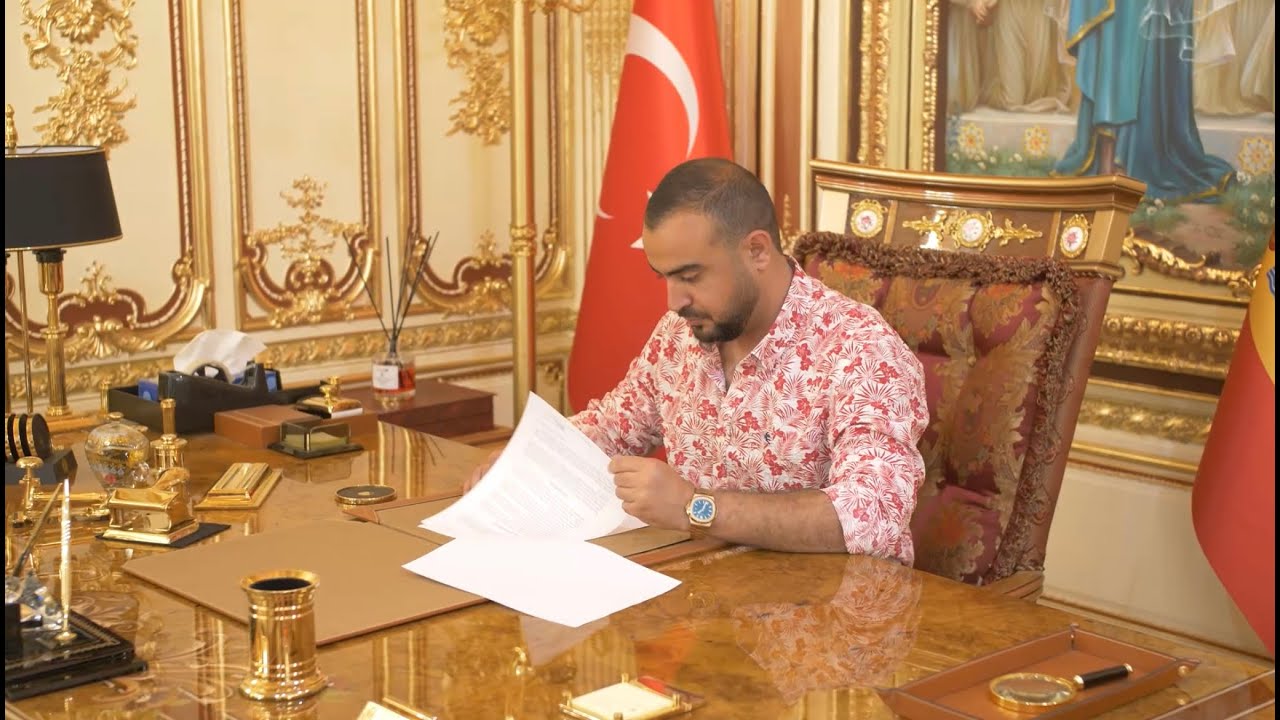
Alumni Success: Building a Business in Marbella
This video introduces one of our Iranian–Turkish alumni who completed the BA in International Business Management at MIUC and went on to open his own company in the centre of Marbella. Rashidi Group now operates in the import and export of copper, aluminium, and other commodities. It’s a look at where hard work, international experience, and the right education can lead.
While you’re here

Meet Our Lecturers
Behind every course is someone who’s lived what they teach. Our lecturers come from international careers in business, politics, marketing, and more, bringing real-world experience into every discussion and mentoring students with a rare level of personal attention.

Learn About Tuition Fees
Transparency matters to us. Here you’ll find a clear breakdown of tuition fees, payment plans, and what’s included, so you can plan with confidence and focus on choosing the path that fits you best.

See How Admissions Work
Our admissions process is designed to be clear and personal from the start. See how each step works – from your first contact to enrolment – so you always know what’s coming next and what’s expected along the way.

Explore the support we offer
We offer counselling to every student through our Student Welfare Support system. Whenever something feels heavy or confusing, you can reach out – the team will sit with you, figure out what’s going on, and help you move through it.