
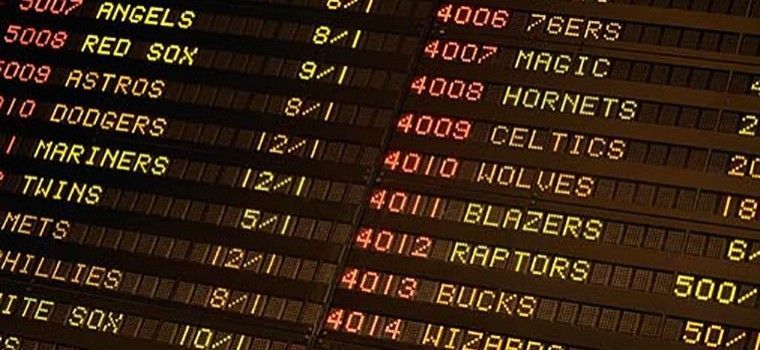
A Bet on Wagering
A fiction by Christophe de Landtsheer
I
Although the most intimate aspects of my personal profile
and the minutest details of my biography are readily available on CosmoNet, I have good reason to mention some of them explicitly, as I am confiding to posterity in the old fashioned way: on paper.
During intermittent episodes of nostalgia I sometimes regret the times when anonymous betting on bankruptcy, death and extinction was permitted, when other certainties than “The Company’s Official List of Odds” existed, and when privacy protection laws preserved a haven for uncertainty and surprise. Today’s pusillanimous limitations of gaming to “positive” and “constructive” events offend my reptilian instincts. Human females equipped with the very common GLLOQ (or “venal”) gene tend to like me because I am relatively well-off, having discovered two minor correlations and one chaotic trend.
I am particularly proud of having unveiled the relationship between the proliferation of cychrus caraboides beetles in the Imperial City of Aalst, and the number of Ambonese tourists visiting Algeria in the subsequent winter season. Of course this doesn’t compare with the disclosure of Qaphqa’s Law1 or the revelation of the Dardenne-ratio, stating that when the number of searches on the terms “sex” and “pension” are equal, the world population’s age averages 42 years and 37 days.
Even if most people still work to earn their livelihood in local currency, their proportion is diminishing as daily tasks are being increasingly automated and ever more citizens engage into the Company’s continuous education programmes in the, often vain, hope to earn some extra Global Gaming Credits.
Unlike the majority of my fellow citizens, who are continuously and obsessively seeking wealth through the discovery of deterministic trends, or Laws, I dedicate my leisure time to, publicly distrusted but nonetheless tolerated historical investigation. I cannot help but to indulge in futile curiosity and to find idle satisfaction in being one of the few to know, for instance, why the most important Ministry of the Cosmo-political Government, which is not only in charge of the Universal Forecast, but also of the Future Genomes Agency, the Central Gaming Credits Bank, the Bureau for the Detection of Cynical Plans, and the Cosmo-political Information Network, is nicknamed “The Company”.
Prior to The Crash the practice of historical enquiry periodically enjoyed the status of a science2. Nowadays history is assimilated, at best, to storytelling, and professional historians have become as uncommon as artists. They tend to
1 The discoverer of which was also awarded the prestigious “Lloyd’s Bi- annual Prize for Lucid Forecasting” 2 This seems to have been based on the foolish assumption that knowledge of past events could prevent Mankind to relapse into previously made mistakes.
be highly suspected as most of them dissent with the doctrine sustaining the Cosmo-political Government’s edicts. Some of them have even had their Global Gaming Credits withdrawn for emitting historicist points of view, or even for uttering ironic wits on The Company’s slogan: “Focus on the Future”.
Dilettante historians usually are motivated by the participation to illicit quizzes and favour the study of the causes of The Crash and of the chaos preceding and following it. My inquisitiveness on this topic is satisfied by the official account explaining The Crash by the confluence of numerous processes, and not by just one, single cause. The popular hypothesis encouraged by solila?tre sects of the occurrence of a “coronal mass ejection” must, in my view, be discarded as the Company’s odds against betting being completely and durably disrupted by such an event were 56,703/13 at that time.
I prefer to focus on the Company’s history before The Crash and concentrate on the rare remaining sources concerning the early days of the Company. This peculiar interest is attributed to a perverse liking of paper in all its forms. The psychologists I had to consult in order to obtain and then retain my Physical Document Research Permit unanimously confirmed the same diagnostic: an “abnormal historical interest rooted in papyrophilic sensual disorder”. As this syndrome is considered incurable and could lead to the “horrors of privacy phantasms and ultimately, solipsism”, I was declared unfit for procreation purposes, which had the effect of making me even more attractive to GLLOQ-type women.
3 I use fractional odds in this paper, as these were mostly used before The Crash.
II
Rumour has it that its secretive Founder established the Company after having won a fortune on the dullest of bets: a lottery. This account of the Company’s origin must be of legendary nature as it seems highly unlikely for a rational visionary to, not only partake in gaming with improbable odds, but to also win its prize.
According to reliable sources the Founder had been employed as a consultant by a think tank in Buenos Aires and his life’s ambition was to forecast the probability of significant future events by aggregating data and opinions originating from very extensive knowledge and data networks. He tried to obtain funds to start-up a company but he failed as most bona fide investors were deterred the project’s complexity and extreme innovativeness. Other parties didn’t even bother to examine plans which they considered megalomaniac. The demise of his initiative, as often it used to be the case in pre-Crash times, opened the door to sarcasm and ridicule. Soon he was driven into giving up his plans and career.
On a starless night, while tending the bar of a hotel in Macao, the Founder engaged into a conversation with a talkative patron who was only too happy to introduce him to the wonders of “novelty” gambling. The lonely customer insatiably detailed how his bookmaker firm made money by arranging bets on future events in television shows, politics, financial markets, competitions, award ceremonies, &c.
This revelation reversed the Founder’s defeatism and revived his belief in the Fourth Mystifier’s4 principle stating that man’s destiny is to become the “master and owner of Nature”. To this general principle he coupled his personal conviction that value could only be created through accurate forecasting.
During the following weeks the Founder persuaded the chairman of a bookmaker company to create a subsidiary destined to venture into the uncharted territory of “business- to-business novelty gambling”. At first the chairman had been unwilling to relinquish his conviction that entertainment was the core of his business, but after this prejudice had been overcome the new firm soon decidedly engaged into the execution of what, after all this time, still is its primary mission: to extend the possibility of gaming to every situation that could be established as a future fact.5
The betting themes were consequently expanded to natural phenomena, macro-economic performance, terrorist feats, scientific discoveries, industrial innovations, administrative decisions, &c. Some “idiotic bets” such as on the proof of God’s existence, or on the date of the world’s end, were maintained, as a number of fanatical punters obstinately continued to bet on these “easy money” books. A community of assiduous punters quickly grew, as did the amounts wagered. This early boom didn’t only enable the start-up to gather advice from the most reputed academics, analysts, experts and specialists, but it now also was in position to access and
4 Presumably Rene? Descartes himself. 5 See Michael Oakeshott “Historical Events” in “On History and Other Essays”, p. 92.
process gigantic amounts of “exhaust” data supplied by sources as diverse as currency exchanges, NGO’s, search engines, power plants and kindergartens.
Last week my housekeeper’s sister (whom I suspect to be compassionate on my behalf because of my papyrophilia) handed me an ancient source illustrating how rudimentary early forms of betting were and how bookmaker companies were perceived: “The bookies, of course, usually win. That is how they stay in business. But sometimes they must get rather nervous. In 2004, for example, a bookmaker proposed wagering on a series of science-based bets. The finding of intelligent life on Titan, Saturn’s largest moon (10,000/1), the building of a nuclear-fusion power station (100/1), the detection of a Higgs boson (6/1) and proof of the origins of cosmic rays (4/1) attracted only around 100 bets in total, exposing the bookmaker to maximum losses of some £130,000 ($200,000)6.
The story was different, though, for the fifth wager?—that gravitational waves would be detected. News that the bookmaker was offering 500/1 against this happening spread rapidly among the small group of physicists and astronomers searching for such waves. After a flurry of bets, including one for £50, the bookmaker cut the odds to 100/1, but that was still not enough to stem the flow. Jim Hough of Glasgow University, the principle British investigator on GEO600, an Anglo-German gravitational-wave detector, placed a £25 bet at those odds after being alerted to them by a journalist on the
6 The equivalent of about 370,000 Global Gaming Credits.
Daily Telegraph. He was one of nine punters who got in at 100/1 before the odds were cut again, to 10/1. They then fell steadily to 2/1 by the time the book was closed a fortnight later. Sadly for both science and scientific gamblers, the bookmaker’s initial instinct proved correct. No gravitational waves were detected by the deadline (nor subsequently), and the firm cleaned up.”7
During the following years the Company rapidly became extremely influential as it provided increasing revenues to knowledge workers, scientific institutions and information providers. Its social policy was to sponsor a wide array of research farms and think tanks. Soon subsidiaries were implanted in capitals and near knowledge nodes worldwide. The Company’s unprecedented responsiveness to risk triggered disruptive transformations which revealed unknown sources of value and novel ways of conducting business. These changes appeared to be of such a fundamental nature that the Company’s first chairman later became referred to as the “Redeemer of Capitalism”8.
The stakes skyrocketed as corporations and government agencies rallied the wagering frenzy with the intention, not just to validate their forecasts, but also to hedge tactical and strategic speculations. Airlines gambled against the chances of volcanic eruptions, harsh winters and bio-fuel shortages. Customs departments bet on drug production forecasts, tax
7 “Betting on Science” in The Economist Jul 29th 2010 8 I have found this epithet in the physical book “The Man Who Made Capitalism 4.00 Happen”. The author of this essay claims that the Founder’s boss “rejuvenated the Western Spirit” and that “… his gambit probably was the single most important factor in the transcendence of the Great Financial Crisis of the early XXth century.”
increases on tobacco, and population mobility indexes. Managers were prompted to wager their bonuses on the assumptions they had used in their forecasts ?…
Tremendous success, however, always comes with critique and enmities. A deluge of, mostly defamatory, allegations confirmed that the Company made no exception. Other bookmakers “warned” for a monopolistic situation in the novelty gambling market. Stock exchanges accused the Company of creating parallel markets. Consulting firms systematically attempted to discredit the Company’s data and methods. Polling outfits refused to cooperate in Company related projects. Environmentalists demanded the introduction of a Tobin like tax on wagering. But the undoubtedly most threatening menace emanated from a once potent organization, the International Insurance Federation, and its group action against the Company invoking unfair competition.
The IIF’s powerful lobby mobilized a significant part of the public opinion and a not negligible number of policy makers against novelty gambling alleging that it would be akin to insider trading9. The Company won the argument in court by successfully sustaining that a conceptual distinction must be maintained between certainty, on the one hand, and foreknowledge or prescience, on the other. This ruling cascaded cataclysmic effects throughout jurisprudence as the relationship between key legal concepts ?– such as “fact”, “supposition”, “information”, “proof”, “bet”, “premium”,
9 A now forgotten notion which used to be a very sensitive governance topic for the egalitarian democracies of the past, as it enabled some “privileged” people to use confidential information to increase their personal wealth.
“event”, “measurement”, &c ?– had to be reconsidered from scratch. To mark its triumph the Company re-named its trade into stochastic gaming.
The jolts of the trial had amply provided the Company with opportunities to publicize the benefits it contributed to the civil society, such as, the stabilisation of stock exchanges and macro-economic trends, the hitherto unseen degree of integration of huge data systems, improved organisational and market transparency, more effective funding of research and science, &c. But the greatest of all its merits remains ?– in my modest opinion ?– the Company’s significant extension of the scope of risks that it allowed to be (partially) covered, not only through insurance, but also via gaming.
The Company’s legal victory, paradoxically, entailed a noticeable toughening of the competition. Financial institutions absorbed consulting firms in a bid to offer similar services. Corporations forged new collaborative models with universities and governmental institutions. Insurance companies launched bespoke gaming sites.
The Company’s response to these dourer market conditions wrong footed the whole field. It was also the Founder’s last stroke of genius. Before unexpectedly deceasing10 he introduced “mid-term” bets. This move extended the wagering time horizon from one to three years in a first step, and to five years in a second phase. Such short betting terms may seem derisory today as the Company is
10 Some, probably unreliable sources suggest that he was murdered consequently to the opening of a secret book by a gang of criminal car sellers (which is a tautology) on the date of his death.
currently proposing fifty year horizons, but at that time, it stunned the competition.
Mid-term gaming implied a complete re-positioning of the Company’s role in society at large. Its contracts appeared into corporate balance sheets and people included betting contracts into their wills. Although the Company consequently faced increased legal costs as unsatisfied heirs and trustees disputed some of the pay-outs, this innovation initiated what is also known as the Company’s “Golden Age”.
III
This era of unprecedented prosperity was, however, short-lived as tensions grew between states that prohibited betting and others that encouraged it. The latter considered the factual information withheld from the wagering process as an infringement on the Principle of Universal Access to Public and Private Information. Rogue states organised parallel wagering, issued fake contracts, and happily hosted criminal organisations employing armies of hackers to tamper with the Company’s odds and who covered malevolent bets, for instance, on the bankruptcy of one or the other concern, or on the time and place of their enemies’ deaths.
Things really got out of hand when a team of knowledge workers unexpectedly were assassinated after having wrongly predicted the extinction date of the Egyptian vulture. Punters were outraged because they hadn’t been offered a chance to wager on this dramatic murder. An increasing number of specialists refused to calculate odds unless they would be protected and body guarded, practically reducing the number of bets offered to the public. Keeping in mind that “mass unrest is only four gambles away”, the fanatic enemies of gaming jointly struck at that very moment, as if a tally-ho had been sounded by an omniscient genie. The System promptly collapsed.
Today’s most popular illegal book concerns betting on the root cause of The Crash. It offers 3/1 for the verification of the conspiracy theory (presuming that the Company, having predicted it, contributed to precipitate The Crash in order to seize power), and 4/1 in favour of the self-fulfilment hypothesis (sustaining that The Crash happened because it had been predicted). Needless to say that the proponents of the conspiracy theory invoke this difference in odds as irrefutable confirmation of their conviction. As far as I am concerned, I consider this type of bet as absolutely frivolous, as History will never ascertain the causal relationships linking past events.
—oOo—
11 “A Bet on Wagering” © Christophe de Landtsheer: 100907
Author: Christophe de Landtsheer